 F 102
F 102
Exhibiting Tigers
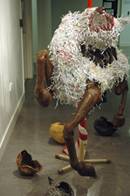
The Tiger.
Clay, wire, mesh, shredded documents,
crepe paper, steel, rust, Coke cans, chair base.
What happens in the process of art?
The internal and liminal experience becomes engaged in the potential space with a process that involves external objects and materials, to produce a finished object.
The finished object needs to be exhibited. It needs to be seen, and is incomplete without an audience, or a response. Artists generally want and need their productions to take part in a dialogue. This is a cultural activity after all. Yet the process of exhibiting in our culture is quite different from that of creating. It is concerned with acceptably standardised proposals, organisation, packaging and delivery, how the thing looks or seems to others, tidying up the details, making the work presentable, adding frames, plinths, titles and other extraneous material. It becomes like a trade show, a marketing exercise, a book keeping drudgery. The spontaneity evaporates, the intention is compromised. A sinking feeling drags you down through the nausea of obligation, boredom and anxiety. I have an abhorrence of it. The effect, for me, is a closing of that potential space where the work was created, with a door that firmly shuts the work into the real world of objects named by others.
It is however possible to open other doors, to other potential spaces, from the object.
The paper tiger, whilst exhibiting itself in the Design Department, was used for a beginner’s class on ‘objective drawing’. The class all chose to draw the ceramic hooves, and engaged in a discussion about the meaning of the beast. One student developed a detailed thesis around the idea of the tiger as a mythical god, the authorial truth of which he was certain.
The tiger, then, although trapped in the real-world space of the Department, entered the potential spaces of the students and engaged them in imaginative play. And there it resides to this day, as memories of experience, mythological narrative, and historical drawings of hooves.
I am happy to know that it is there, dispersed. Perhaps a dislike of exhibiting can be itself transformed in this potential space, into an engagement with the imagination of an audience.